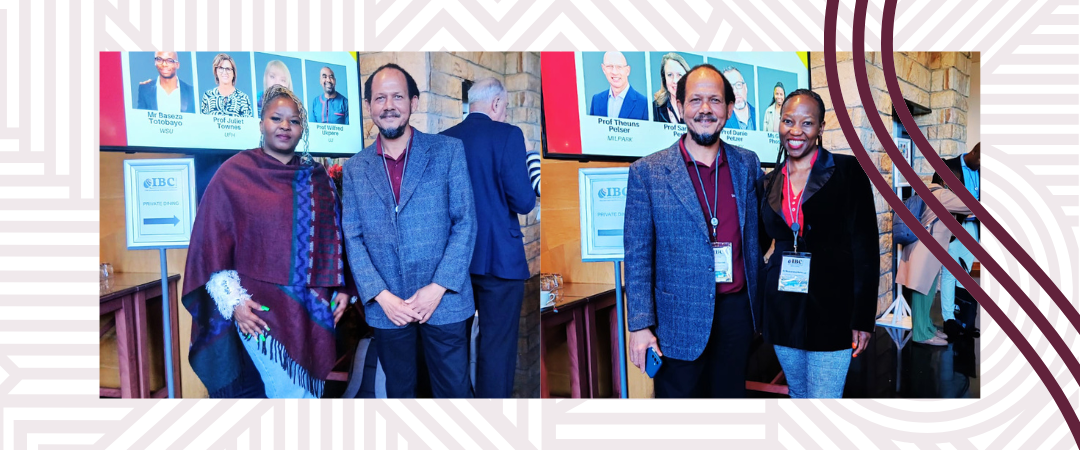
The 19th International Business Conference (IBC) was held in Kleinmond from 5 to 7 October 2026. The IBC hosts a variety of academic publication tracks that include business management, entrepreneurship, human resources, tourism, etc. This year, a major talking point was the rise of digital entrepreneurship worldwide, with South African researchers highlighting how digital platforms and technologies are providing unique opportunities for African entrepreneurs.
__________________________________________________________________________
Digital entrepreneurship and technology adaptation – and especially digitalisation as a cross-cutting lens – were a common theme across many of the presentations at the recent International Business Conference (IBC) held in Kleinmond. Organised by the Business School Partners Network (BSPN), the conference brought together academics, thought leaders and industry partners, including delegates from Denmark and the UK.
“Digital entrepreneurship has taken off over the last few years all over the world,” said Dr Clint Davies of the Allan Gray Centre for Africa Entrepreneurship (AGCAE). “Just think about Uber and Airbnb and how these businesses have impacted on our society.”
Dr Davies co-authored two working papers presented at the conference, of which one reflects AGCAE’s growing interest in digital entrepreneurship ecosystems. He described digital entrepreneurship as the use of digital platforms and tools to identify business opportunities and develop and deliver products or services to customers.
“These forms of digitalisation are increasingly shaping how entrepreneurship is being conducted,” he said.
Dr Davies also referred to well-known businesses such as Takealot and Checkers Sixty60. “More and more, we are seeing businesses relying on platforms to ensure that their goods are more efficiently delivered to the customer’s door.”
He said this development presented new areas of study for business schools and entrepreneurship experts and is helping to shape a growing body of knowledge.
The paper he presented called for the re-evaluating of entrepreneurship competencies given the current shift towards digital entrepreneurship and was co-authored with two other colleagues at AGCAE. It is titled Digital Entrepreneurial Ecosystems and Digital Entrepreneurship: Reframing Entrepreneurial Skills in the Digital Age.
Dr Davies said the paper was still a work in progress and that presenting it at the conference allowed the researchers to obtain very helpful input from fellow academics.
“We received excellent feedback, which enriched and deepened our understanding of the topic and opened new areas of inquiry.” Indeed, two other papers were closely tied to the topic. One focused on the growing participation and visibility of women in digital entrepreneurship which highlighted how African women entrepreneurs were taking advantage of the digitalisation of industries to launch products and businesses. The other focused on the dynamic capabilities tied to rural digital entrepreneurship.
Skills required for digital entrepreneurship include data literacy and analytics, the use of automation and artificial intelligence tools, and an understanding of websites and digital platforms. Entrepreneurs may also require knowledge of cybersecurity, data privacy, digital marketing, content strategy, community building and specialised e-commerce practices.
Dr Davies said digital entrepreneurial ecosystems differed from traditional entrepreneurial ecosystems and require further studies, particularly in relation to financial management, marketing and access to target markets.
Researchers can also explore how digitalisation affects entrepreneurs’ understanding of their customers and whether access to financial support differs from that available to traditional businesses.
“We don’t know what the next five or 10 years will look like, but visionaries are able to spot the trends and may be more willing to back entrepreneurs who see a gap in the market or an innovative way to serve customers.”
Nearly 200 delegates attended the conference. The adoption of artificial intelligence and other technologies in business was prominent across almost all conference streams.
The AGCAE creates, integrates and shares knowledge to support data- and dialogue-driven entrepreneurial and innovation ecosystem development in Africa in order to increase the wellbeing of communities through entrepreneurship. Since its launch in 2023, the Centre has been involved in several research projects and initiatives. Most recently, it helped co-design and launch of the South African Innovation Ecosystem Policy Hub.